
Pressure reducing valves are critical components in fluid systems, ensuring that downstream pressure remains stable and within safe limits. Over time or during system changes, it may become necessary to adjust these valves to achieve optimal performance. Understanding how to adjust a pressure reducing valve correctly is essential for maintaining system efficiency, protecting equipment, and ensuring user safety.
In this guide, we’ll explain how a pressure reducing valve works, why adjustments are sometimes needed, and provide step-by-step instructions on adjusting it properly.
Understanding Pressure Reducing Valves
A pressure reducing valve (PRV) automatically regulates high inlet pressure to a lower, consistent outlet pressure. It does this by using a spring-loaded diaphragm or piston that senses downstream pressure and modulates the valve’s position accordingly.
PRVs are widely used in water mains, steam systems, compressed air networks, and industrial applications where controlled pressure is vital. Over time, changes in system demand, wear on internal components, or modifications to connected equipment may require a recalibration of the valve’s set pressure.
VALSTEAM ADCA Pressure Reducing Valves
The ADCA PRV25 series is a direct-acting pressure reducing valve designed for use on steam, compressed air, water, and other gases or liquids. Compact and versatile, it provides precise downstream pressure control in small to medium-sized systems, making it ideal for industrial and commercial applications. Built from durable carbon or stainless steel, the PRV25 ensures long-lasting performance even in demanding environments.
The ADCA POT is specifically engineered to protect the diaphragms of RP45 pressure regulators in high-temperature applications. Acting as a thermal barrier, it safeguards sensitive components from excessive media temperatures, ensuring reliable operation and extending the service life of your pressure control systems. Constructed from robust materials, it offers excellent resistance to wear and thermal stress.
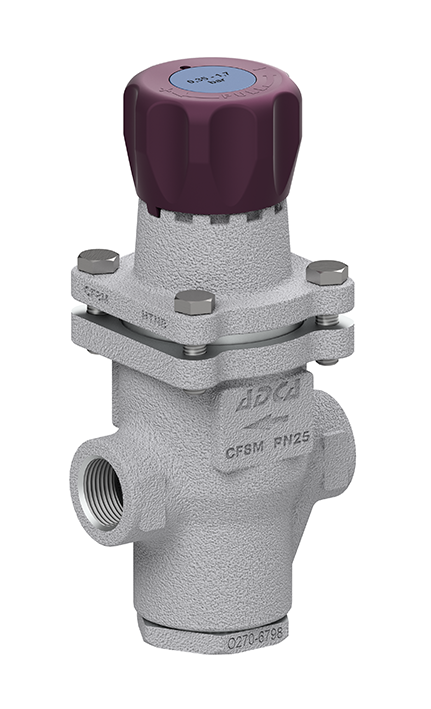

VALSTEAM ADCA PRV25 | PRESSURE REDUCING VALVE

VALSTEAM ADCA POT | WATER SEAL POT
Why Might You Need to Adjust a Pressure Reducing Valve?
There are several reasons why adjustments might be necessary:
- System Modifications: Changes in piping, equipment, or demand may require a different pressure setting.
- Wear and Tear: Springs or diaphragms can lose tension over time, slightly altering the original settings.
- Fluctuating Pressures: If the outlet pressure is no longer consistent, a small adjustment may restore proper function.
- New Installations: Some PRVs are shipped with factory settings that must be tailored to your system’s requirements.
How to Adjust a Pressure Reducing Valve
1. Ensure System Safety
Before making any adjustments, confirm that the system is depressurised or that you can safely work on the valve without risk. Always wear appropriate personal protective equipment (PPE) and follow your site’s safety protocols.
2. Locate the Adjustment Screw or Knob
Most pressure reducing valves feature an adjustment screw, knob, or cap on top of the valve housing. This controls the tension on the internal spring, which in turn determines the outlet pressure.
3. Determine the Current Pressure
Install a pressure gauge downstream of the valve if one is not already fitted. Open the system slightly to allow flow and observe the current outlet pressure reading.
4. Make the Adjustment
- To increase the outlet pressure, turn the adjustment screw or knob clockwise. This compresses the spring, allowing the valve to open further and raise downstream pressure.
- To decrease the outlet pressure, turn the adjustment screw or knob anti-clockwise. This releases spring tension, reducing flow and lowering pressure.
Make small adjustments (quarter turns) and allow the system to stabilise after each change to get an accurate reading.
5. Monitor and Test
Once you reach the desired pressure, fully open downstream fixtures and observe whether the valve maintains stable pressure under flow conditions. Check for leaks around the adjustment screw and tighten the lock nut (if fitted) to secure the setting.
6. Recheck After System Use
After the system has operated for some time, recheck the pressure to ensure the adjustment remains effective.
Applications That Rely on Correctly Set PRVs
Properly adjusted pressure reducing valves are critical for applications such as:
- Municipal Water Mains: Protecting pipes and appliances from high supply pressures.
- Steam Systems: Preventing damage to heat exchangers and ensuring energy efficiency.
- Pneumatic Tools: Delivering air at the correct pressure to avoid underperformance or equipment damage.
- Industrial Processes: Maintaining consistent conditions for sensitive machinery.
Benefits of Correct Adjustment
Accurate PRV adjustment delivers numerous advantages:
- Enhanced Equipment Protection: Avoids excessive wear and potential failures.
- Improved Efficiency: Keeps systems running within optimal parameters.
- Energy Savings: Reduces unnecessary pumping or heating costs.
- Increased Safety: Minimises risks associated with overpressure events.
At ISIS Fluid Control, we provide a wide range of pressure reducing valves designed for precise control and easy adjustability, supporting your system’s reliability and performance.
Why Choose ISIS Fluid Control?
As a trusted global supplier, ISIS Fluid Control offers expertly engineered valves and technical support to ensure your systems run at their best. Our team can assist with selecting, installing, and adjusting PRVs to meet your specific requirements across industries such as energy, water distribution, and pharmaceuticals.
Ready to Optimise Your System?
Explore our range of pressure reducing valves or contact our experts for guidance on selecting and adjusting the right solution for your application.